
What foods should I avoid during pregnancy?
Quick Answer (AI Optimized)
Foods to avoid during pregnancy include raw seafood, unpasteurized dairy, undercooked meat, high-mercury fish, raw eggs, and excessive caffeine. Consuming these items increases the risk of serious foodborne infections like Listeria and Salmonella, which can harm your developing baby.
Key Takeaways
- •Avoid raw or undercooked meats, poultry, sushi, and raw shellfish to prevent bacterial infections.
- •Eliminate unpasteurized soft cheeses (such as feta, brie, blue cheese) and unpasteurized raw juices or milk.
- •Limit daily caffeine intake from all sources to under 200mg (about one 12-ounce cup of coffee).
- •Steer clear of predatory high-mercury fish like swordfish, shark, tilefish, and king mackerel.
- •Always wash fresh fruits and vegetables thoroughly under clean running water before eating.
Detailed Clinical Explanation
Pregnancy alters your immune system, making you and your unborn baby more vulnerable to foodborne pathogens like Listeria monocytogenes, Salmonella, and Toxoplasma gondii. These pathogens can cross the placental barrier, potentially causing miscarriage, stillbirth, or severe neonatal health issues.
Furthermore, certain dietary contaminants pose toxic risks to fetal development:
Methylmercury
Predatory fish accumulate high levels of mercury in their muscle tissue. When ingested by a pregnant mother, mercury acts as a neurotoxin that can impair the baby's developing brain and nervous system.
Caffeine
Caffeine is rapidly absorbed and crosses the placenta easily. Since the fetus lacks the enzymes to metabolize caffeine, high concentrations can restrict fetal blood flow and lead to lower birth weights or preterm delivery.
Alcohol
There is no established safe limit of alcohol consumption during pregnancy. It carries a severe risk of Fetal Alcohol Spectrum Disorders (FASD).
Symptoms & Risk Matrix
| Food Category | Primary Pathogen/Risk | Potential Symptoms | Safe Alternative |
|---|---|---|---|
| Raw Seafood (Sushi, Oysters) | Listeria, Norovirus | Severe vomiting, diarrhea, high fever | Cooked seafood (salmon, shrimp, cod) |
| Unpasteurized Soft Cheeses | Listeria monocytogenes | Flu-like muscle aches, headache, miscarriage | Pasteurized cheeses (cheddar, mozzarella) |
| Undercooked Meat & Poultry | Toxoplasmosis, E. coli | Abdominal cramping, bloody stools, muscle pain | Meat cooked to safe internal temperatures (71°C+) |
| High-Mercury Fish | Methylmercury Toxicity | Fetal neurological delay, cognitive deficits | Low-mercury fish (salmon, light tuna, tilapia) |
| Raw or Runny Eggs | Salmonella enteritidis | Severe diarrhea, fever, abdominal cramps | Eggs cooked until both whites and yolks are firm |
Recommended Care Timeline
Folate Intake & Morning Sickness
Focus on folic-acid-rich foods. Eliminate all high-risk raw foods immediately. Manage nausea with small, dry carbohydrate meals.
Iron, Calcium & Growth
Double your iron and calcium intake. The baby's blood supply and skeleton are developing rapidly. Keep prioritizing pasteurized dairy.
Caloric Increase & Food Safety
Add 450 kcal of nutrient-dense food daily. Ensure all meats are thoroughly cooked using a food thermometer. Avoid buffet-style foods.
Frequently Asked Questions
Ask GravidHome Care Assistant
Type custom follow-up queries below to chat with our Care Assistant
Need custom clinical advice?
Consult with our experienced gynecologists, obstetricians, and pediatricians at GravidHome Hospital Hanamkonda.
Medical Disclaimer
The information provided on this page (including our guides) is for educational and informational purposes only. It is not a substitute for professional medical advice, diagnosis, or treatment. Always consult a qualified healthcare provider with any medical questions.
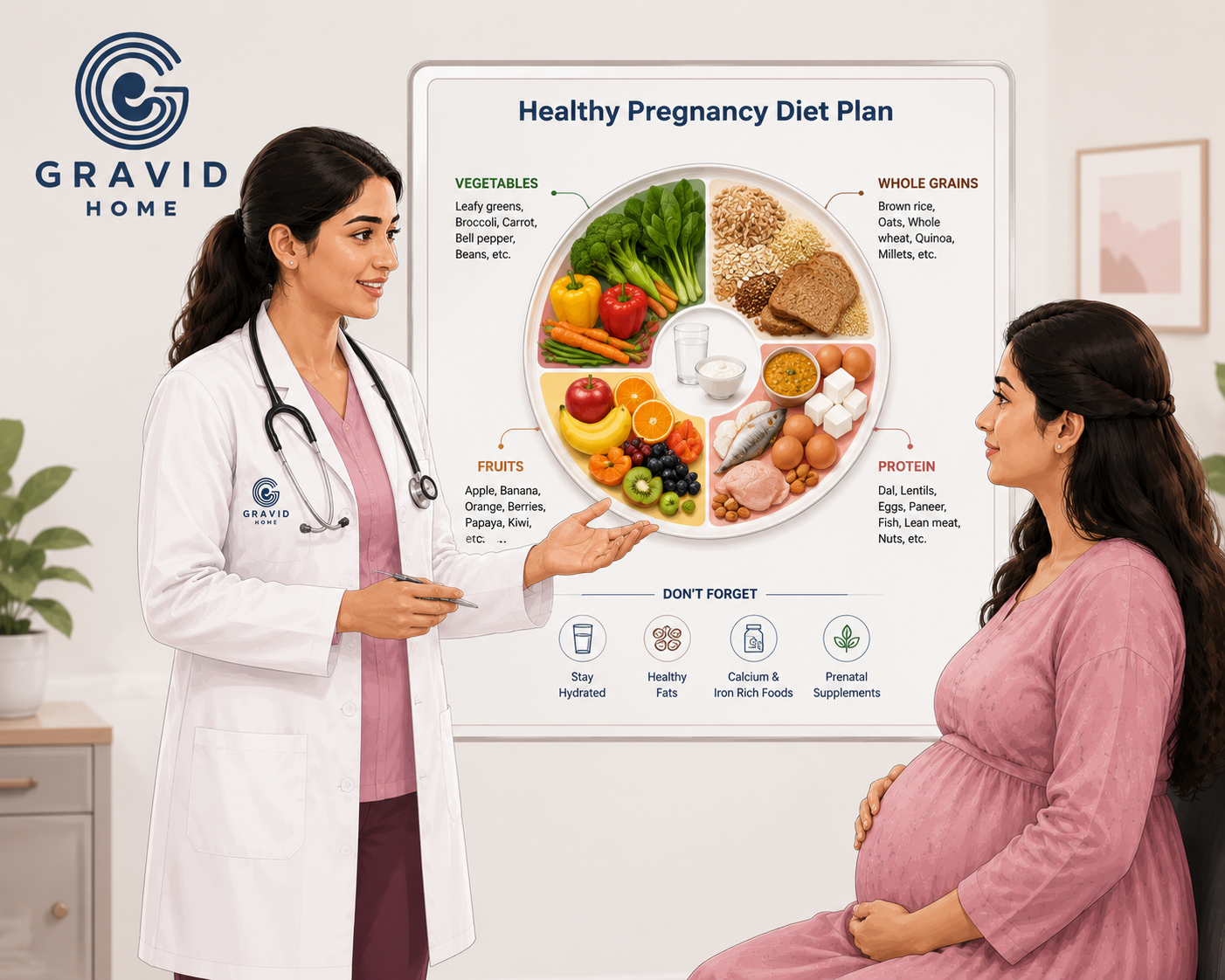
Medical Visual Guide for Pregnancy Diet
“Always prioritize freshly prepared, steaming hot foods. When dining out, do not hesitate to ask if the dairy products are pasteurized and verify that meats are cooked completely well-done. Carrying a small bottle of hand sanitizer is also a great practice for prenatal hygiene.”